
Masquerade
Killing Joke Cover Art #1: sketches

Words and Imagining, following through on last entry’s "forthcoming": once something’s thought (in word or image), it’s in the cards for emergence.
Sierra Barnes, who has a studio in the Torpedo Factory local to me in Alexandria, Virginia, is bringing forth the cover for The Killing Joke. You can find more about Sierra and her work at Sierra Bravo Art
She took off from an early poem in the book, “Masquerade,” grabbed its skeleton key.
          Curiosity
If there were a mask for this project – for this projection:			Trickster Fox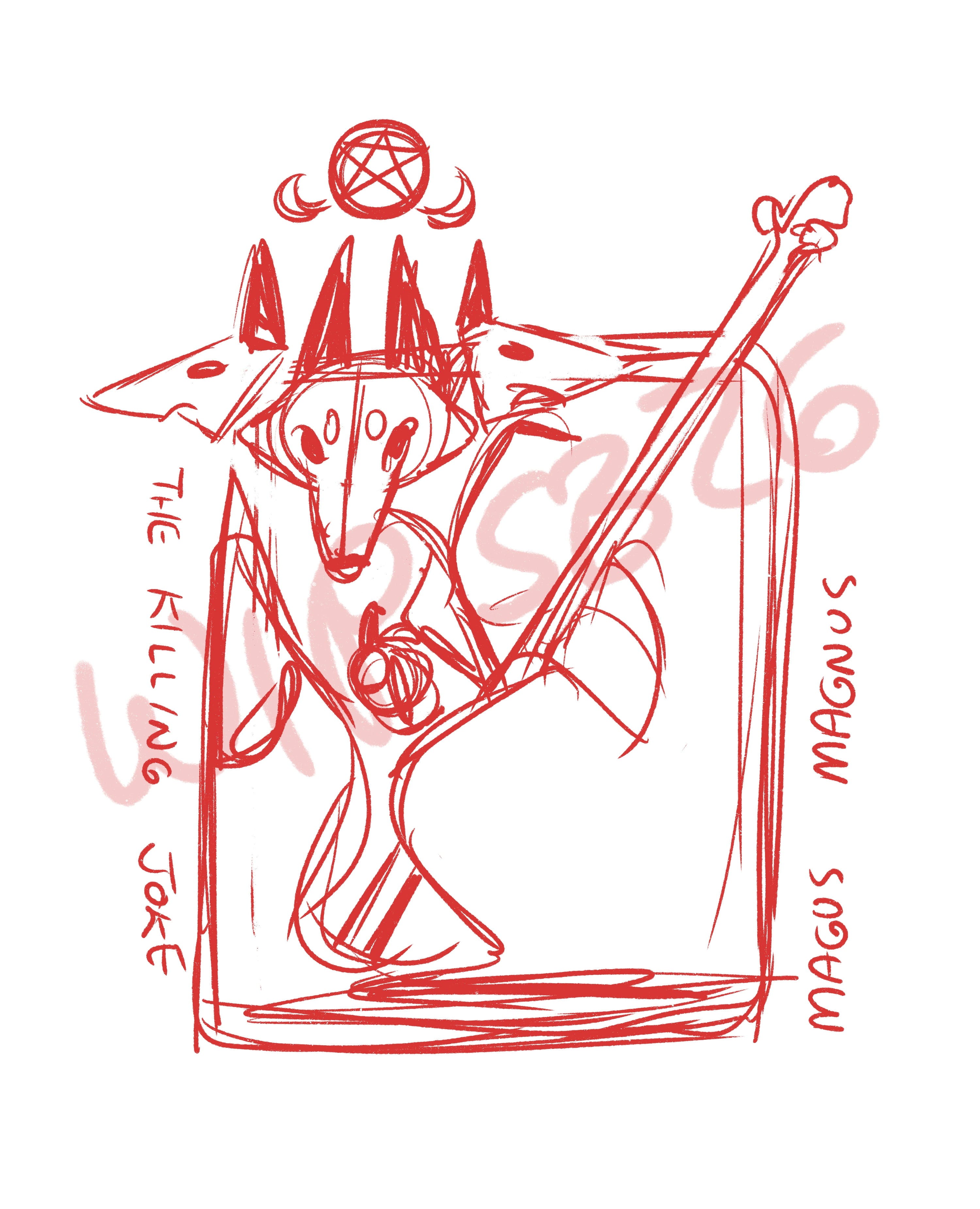
oh yeah, this was the sketch I said yes to.
The poem has a lot to say about masks and faces. Here’s for now, as through eye slits, barely a glimpse.
Every face is a mask, we look into one another’s eyes and face for…
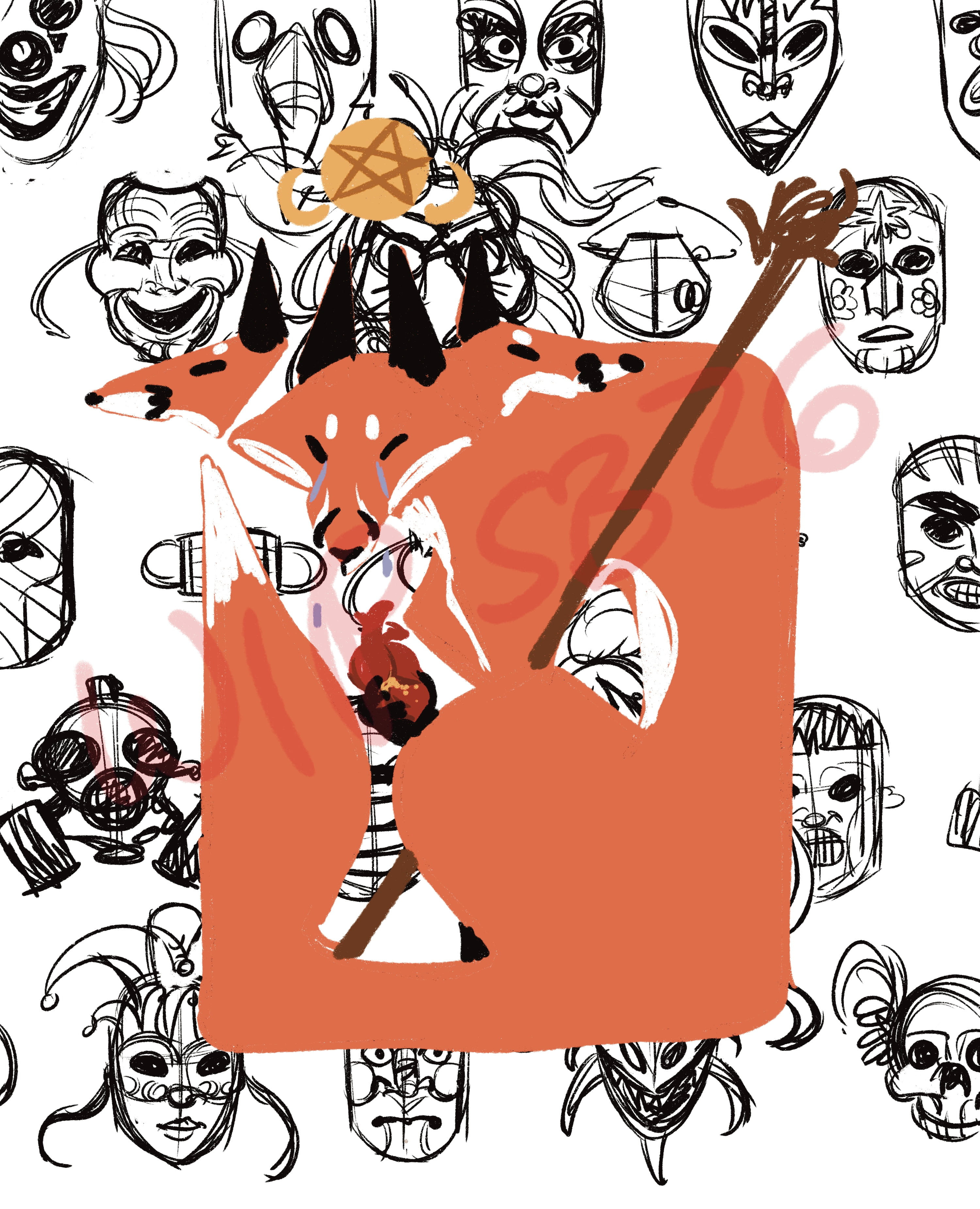
Barnes didn’t shy away from taking on every mask I mention in the poem (and more).
your choice of face tells a lot about you.
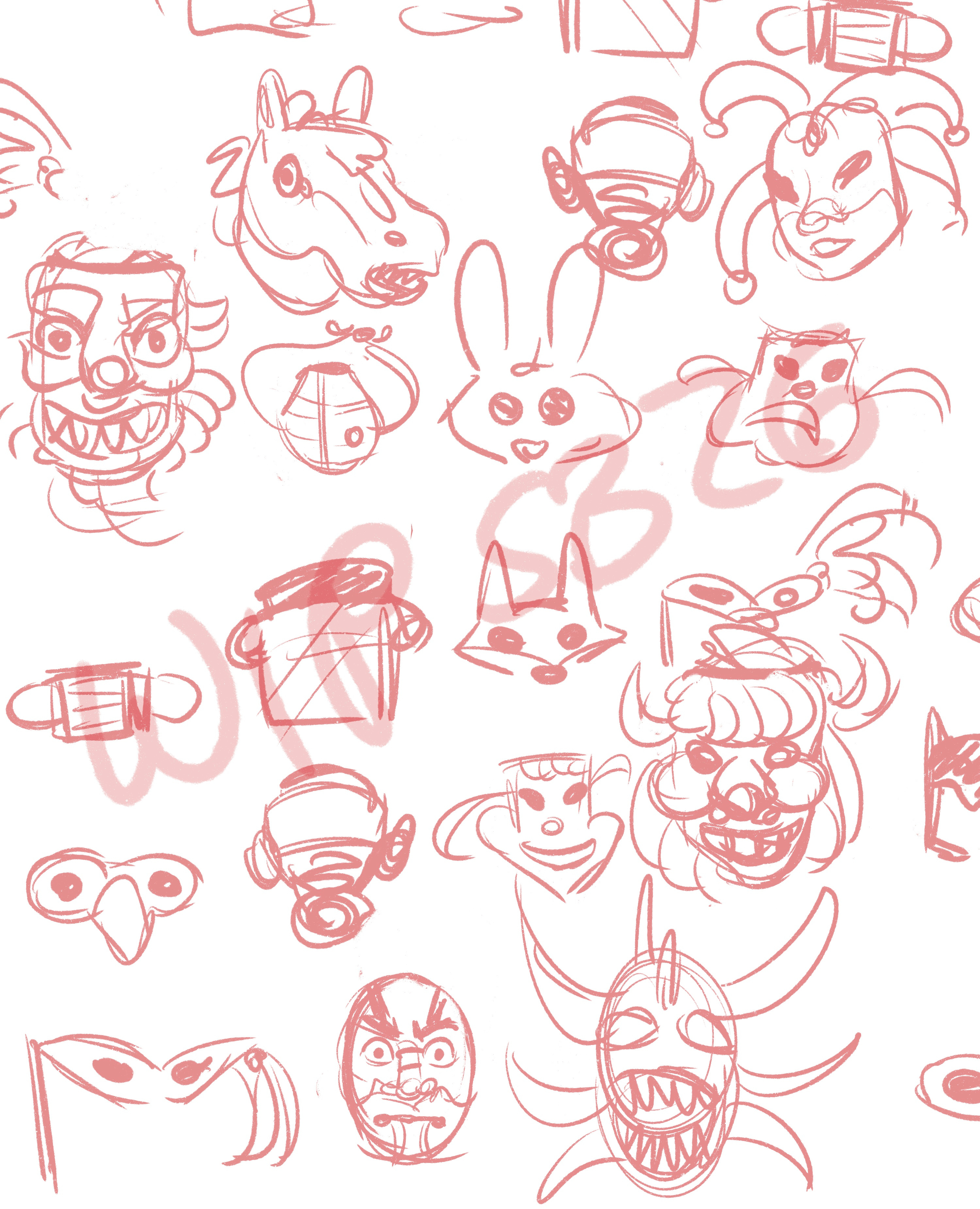
Onward in the coming weeks to inks and colors.
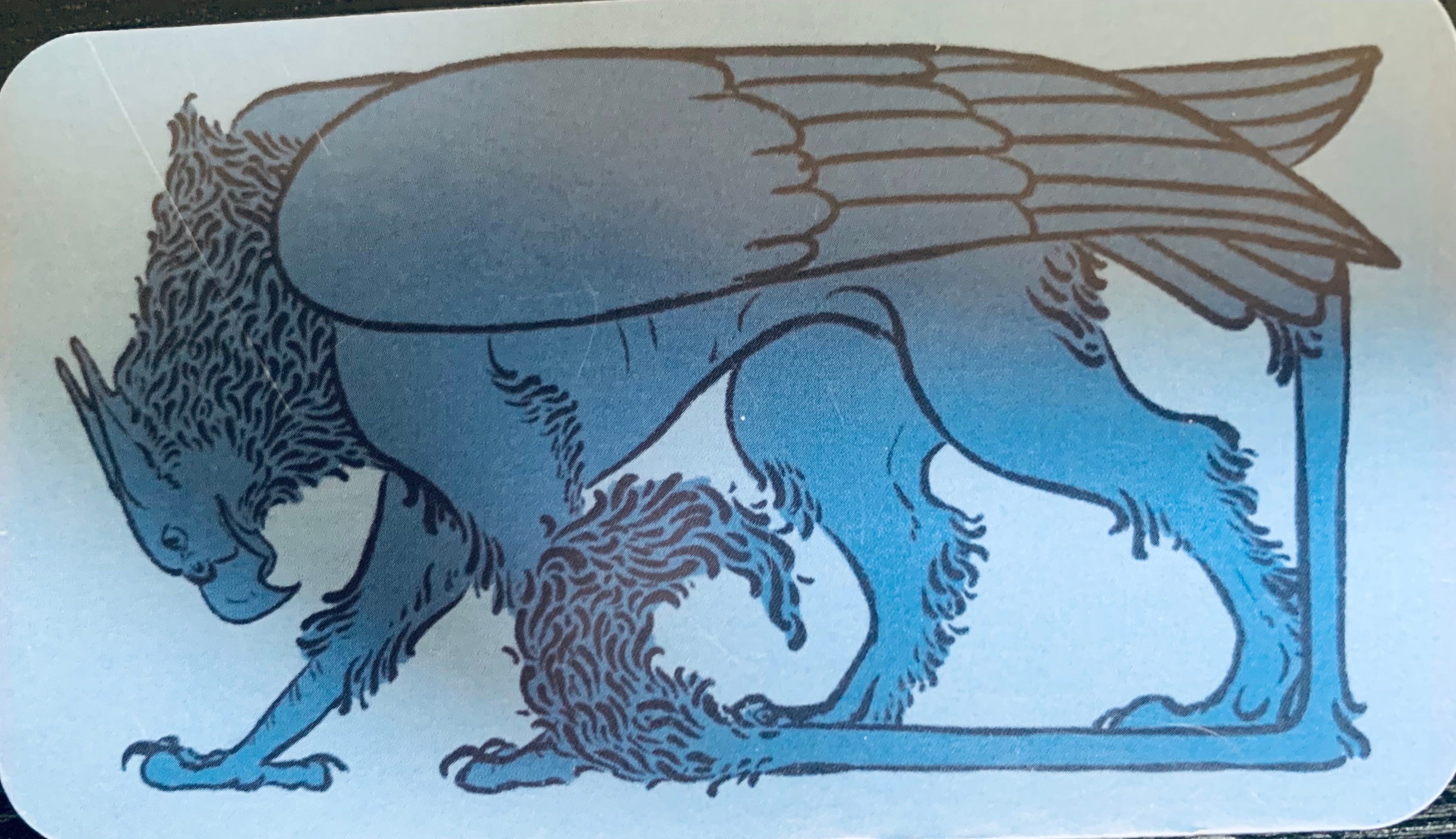
When I first came across Sierra Barnes’ work at the Torpedo Factory, I couldn’t help being drawn to her painting of a Gryphon (shown here on her business card); you know my college-aged son is named Gryphon, with Alice in Wonderland spelling — further, I understood immediately we had a lot of art and myth in common, when there in her studio was perched the exact same majestic plush hand puppet of a Gryphon my son still has in his childhood room.
Plus, I can’t stop reading and thinking about a zine of hers on the Chimera as creature and concept: "I am Also a Sum of My Parts."; and the palette and flatness of the creatures on its cover have me gazing at it again and again.
The specific Chimera of Greek mythology (lion for the most part, yet with a goat head, part goat body for its back, serpent for tail)1, along with other chimerical creatures (such as gryphons), in Barnes’ telling, embraces the exuberance of human imagination. What might seem an ungainly makeshift of unassimilable elements, monstrous and disparate, offers profound implications about artistic integrity and practice; creative hybrids, juxtapositions, clashing collaborations, fusing of divergent visions, and grafted shoots and fragments indicate an ethos of inclusion, openness and acceptance to surprising ideas, uprising thoughts, saying yes to the incoming; here, integrity means integrating, rather than purging — chimerical imagining rejects forced unity or purity (Barnes notes that “even the unicorn, famous symbol of purity, combines the horse, goat, lion’s tail, and narwhal’s horn”). What’s various, mixed, and fused is both ancient and anti-fascist.
Humanity is at its best when it combines different elements.
— Sierra Barnes
Homer, The Iliad Book Six, 181-183 translated by Emily Wilson 2023
In head and shoulders, she was like a lion,
in back and tail, a snake, and in the middle,
a she-goat...
Congratulations on the forthcoming book, M., and I really like her drawings.